Society / Civilizational Shift
Societal shifts, narratives, and public-interest developments. Topic: Civilizational-Shift. Updated briefs and structured summaries from curated sources.
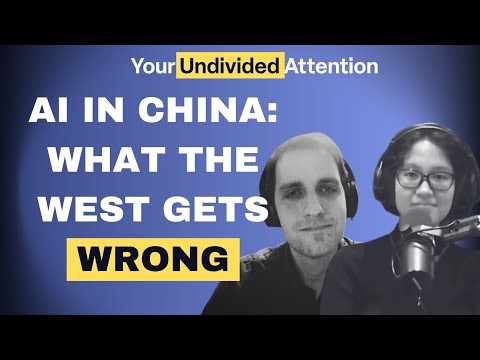
America and China Are Racing to Different AI Futures
Full timeline
0.0–300.0
The discussion centers on the historical context of the Cold War and the misconceptions surrounding the U.S. and China's current AI competition.
- In 1957, the launch of Sputnik and the Gathe Report heightened Cold War tensions, leading to a nuclear arms race
- The Gathe Report inaccurately claimed the USSR had a significant missile advantage, which influenced U.S. nuclear policy
- Historical evidence later revealed that the USSR was far behind the U.S. in nuclear capability at the time
- The narrative emphasizes the need for clarity and situational awareness to avoid catastrophic decisions
- Currently, there is concern about a potential arms race in AI between the U.S. and China, similar to the past nuclear race
- Chinas AI advancements, exemplified by the launch of deep-seek, have raised alarms in the U.S. about competition
- Experts argue that misconceptions exist regarding Xi Jinpings direct control over Chinas AI policies
- The development of AI in China involves a diverse array of actors beyond just the Communist Party leadership
- Understanding the complexity of Chinas AI ecosystem is crucial for accurately assessing its trajectory
300.0–600.0
Tencent has influenced the discourse on AI in China by promoting the term 'deep synthesis' to reframe the conversation around deep fakes. The focus in China is on practical AI applications in traditional sectors rather than a pursuit of artificial general intelligence.
- Tencent, a major technology company in China, shifted the conversation around deep fakes to deep synthesis to promote a more positive understanding of the technology
- The term deep synthesis originated from Tencent and influenced official discussions and regulations in China regarding AI
- Chinese senior leaders, including Xi Jinping, act as a backstop for AI ideas but often lack detailed opinions on AI regulation and architecture
- In China, the focus is on practical AI applications in traditional sectors like manufacturing rather than a race towards artificial general intelligence (AGI)
- The AI plus plan in China emphasizes embedding AI into existing industries and governance rather than pursuing AGI
- Cultural differences influence the perception of AI, with Silicon Valley often viewing it through a lens of potential superintelligence, while China focuses on economic productivity
600.0–900.0
The discussion contrasts the AI strategies of the U.S. and China, highlighting China's focus on practical applications to achieve political, economic, and social goals.
- The potential of AI includes infinite benefits or the risk of wiping out the human race, a concern rooted in the culture of leading AI companies
- Chinese companies focus on practical applications of AI to achieve political, economic, and social goals, contrasting with the more speculative approaches seen in the U.S
- DeepMind and other researchers have discussed AGI since the early 2000s, indicating a long-standing interest in the implications of advanced AI
- The founder of DeepSeek believes in the eventual achievement of AGI, but the companys approach is efficiency-focused due to compute constraints
- The Chinese governments AI strategy emphasizes applications like AI in manufacturing and healthcare rather than solely on developing AGI
- Local officials in China are evaluated based on their success in applying AI to various sectors, rather than on creating advanced AI systems
900.0–1200.0
The discussion focuses on the impact of U.S. export controls on advanced AI chips to China, which began in 2022, and how these restrictions limit China's computational capabilities.
- The U.S. has imposed export controls on advanced AI chips to China since 2022, limiting Chinas computational power
- Chinas ability to develop advanced AI models is constrained by the lack of access to high-performance chips, particularly GPUs from Nvidia
- Despite export controls, there are concerns about smuggling and the effectiveness of these restrictions on limiting Chinas chip supply
- If China were to pursue a Manhattan project for AI, the finite number of chips would hinder their ability to also focus on other applications like healthcare and manufacturing
- The World Artificial Intelligence Conference in Shanghai showcased a pervasive presence of robots and AI technologies in everyday life, highlighting a different experience of AI deployment compared to the U.S
- The conference attracted a diverse audience, indicating a societal embrace of AI technologies in China
1200.0–1500.0
The discussion contrasts the optimistic integration of AI into daily life in China with the more abstract and fearful perception of AI in the United States. It highlights how the rise of information technology in China has coincided with significant economic growth, fostering a positive outlook among its population.
- In China, AI is integrated into everyday life, with people interacting with AI in a physical and visceral way, unlike the more abstract perception in the US
- There is a palpable enthusiasm and optimism about AI in China, contrasting with the US perspective, which often views AI as creepy or threatening
- The rise of information technology in China since 1980 has coincided with significant economic growth, leading to a more positive outlook on technology among the population
- In the US, technology is often associated with negative impacts on labor and social issues, contributing to a more pessimistic national sentiment
- The mobile internet boom in China has empowered a diverse range of real-world services, enhancing convenience for ordinary people
- Experiences from living in China during the mobile internet explosion highlight the rapid integration of technology into daily life, making tasks like paying for services much easier
1500.0–1800.0
The discussion highlights the convenience of mobile payments and internet integration in China compared to the U.S., where visitors often feel they are in a more advanced society. It also addresses the alarming youth unemployment rates in China, which have led to societal concerns despite a generally positive sentiment towards AI among policymakers.
- Mobile payments and internet integration in China have made ticket purchasing and other services significantly more convenient compared to the US
- Visitors to China often feel as though they are experiencing a more advanced society, while returning Americans perceive a regression in functionality
- Chinas rapid adoption of mobile technology contrasts with the USs slower infrastructure development, which has led to a different experience of convenience
- The rise of AI-powered surveillance in China, including facial recognition for entry into gated communities, presents a dark side to the conveniences offered by technology
- Youth unemployment in China has reached alarming levels, with estimates suggesting 20 to 25 percent, leading to societal concerns and policy discussions
- Despite high youth unemployment, there is a generally positive sentiment towards AI among Chinese policymakers, who view it as a productivity booster rather than a threat to jobs
1800.0–2100.0
The discussion centers on the evolving perceptions of AI's impact on employment in China, highlighting a shift from low concern to rising anxiety among policymakers. It contrasts the historical context of economic disruption with the unique challenges posed by AI, suggesting that narrow AI may mitigate job displacement risks.
- The job market is highly competitive for PhD graduates, with a focus on securing citations and publishing in the right journals
- Chinese scholars previously ranked unemployment concerns related to AI as a low priority, reflecting confidence in economic growth mitigating job losses
- There is a shift in perception among Chinese policymakers regarding the impact of AI on employment, with rising concerns about labor impacts alongside a push for automation
- The historical context of economic disruption in China suggests a belief that rapid growth can address job displacement, but AI poses unique challenges as it could potentially replace all types of jobs
- Narrow AI systems may offer a solution by augmenting rather than fully replacing jobs, reducing the risk of widespread joblessness
- The metaphor of a race between the US and China for AI development likens it to using steroids for economic growth, risking internal societal issues like job loss and addiction
- There is skepticism about whether AI can generate sufficient revenue to support a universal basic income for billions, raising questions about the feasibility of such a system in an automated society
2100.0–2400.0
China is experiencing a demographic crisis characterized by a declining population and an aging society, which poses significant challenges for economic growth. The government is investing in automation and robotics to address workforce gaps, but skepticism remains about AI's effectiveness in mitigating these demographic issues.
- China, despite being nominally socialist, has a very low social safety net compared to the US, with minimal welfare support for those unable to work
- The Chinese government is facing a demographic crisis, with three consecutive years of population decline and projections of a super-aged society by 2035
- There is skepticism about whether AI can effectively address the challenges posed by an aging population and declining workforce in China
- Chinas rapid aging population is leading to increased investment in automation and robotics to fill workforce gaps
- The one-child policy has had long-term negative effects on Chinas economy, and recent efforts to encourage higher birth rates have not yielded the desired results
- Chinas reluctance to accept large numbers of immigrants further complicates its demographic challenges
2400.0–2700.0
The discussion addresses the perception of an AI bubble in the U.S. while highlighting the cash-strapped state of China's AI ecosystem, which is facing declining venture capital funding.
- There is a perception of a major AI bubble in the US, but in China, the AI ecosystem is cash-strapped despite the success of leading models
- Venture capital funding in China has been declining since 2021, with the industry collapsing around 2022 due to various factors including COVID and a tech crackdown
- While some companies like Tencent and Alibaba can leverage profits from other arms, overall investment in AI is low in China
- The Chinese government is also facing financial constraints, largely due to the collapse of the real estate bubble, impacting its ability to fund AI initiatives
- Robotics in China is seen as having a bubble, with many startups achieving high valuations without generating revenue from their technologies
- The term involution describes the excessive competition in China, leading to diminishing returns across various sectors, including AI and electric vehicles
2700.0–3000.0
The discussion focuses on the dynamics of price wars in industries like solar panels and the implications for AI development and safety. It highlights the potential for US-China cooperation on AI safety measures amidst concerns about competition and risks associated with AI technologies.
- Price wars occur when too many companies enter a sector, leading to competition on price and selling products below production costs, which can have long-term consequences
- The solar panel industry experienced a price war in the 2010s, resulting in a collapse but ultimately leading to a stronger industry
- Governments may support price undercutting strategies, known as dumping, to dominate markets by destroying competitors before raising prices
- The balance between the risks of building AI and the risks of not building AI is crucial, as failing to develop AI could lead to being outcompeted
- There is potential for a cooperative agreement between the US and China regarding AI safety, similar to the nuclear non-proliferation treaty, despite current political tensions
- Track two dialogues between US and Chinese experts show a general consensus on AI safety measures, including interpretability and safety guardrails
- Mutual trust is lacking in US-China relations, but cooperation could start at the people-to-people level rather than just government-to-government
- The recent AI safety dialogue in Shanghai included prominent figures like Nobel Prize winner Jeffrey Hinton and leading Chinese AI scientists
3000.0–3300.0
Experts agree on the risks associated with AI technology, but companies prioritize profit over these concerns, leading to a disconnect. The likelihood of a binding international agreement on AI regulation between the US and China is deemed unrealistic due to deep-seated distrust.
- There is a consensus among experts on the risks and red lines regarding AI technology, but companies building the technology are not aligning with these concerns due to profit incentives
- The current landscape shows a disconnect between scientific understanding of AI risks and the competitive dynamics of technology companies
- A binding international agreement on AI regulation between the US and China is seen as unrealistic due to deep distrust and rivalry
- Both the US and China are likely to regulate AI domestically for their own reasons, leading to parallel advancements in technology and regulation
- There is potential for light touch coordination and communication between the US and China regarding AI safety practices, despite the lack of trust
- The idea of establishing red lines and communication channels, similar to the red phones used during the Cold War, is suggested to prevent existential risks from AI
3300.0–3600.0
The discussion centers on the contrasting approaches to AI technology between the U.S. and China, emphasizing the potential for safer practices.
- The conversation highlights the differences in how countries pursue AI technology and the potential for safer approaches
- Listeners are encouraged to explore the work being done on AI in China, emphasizing the importance of understanding international perspectives
- China is more aware of developments in the US regarding AI than the US is of Chinas advancements
- The Chinese approach involves adopting and adapting good ideas from the US, which presents a strategic advantage
- Breaking down mental barriers could lead to valuable lessons for the US from Chinas regulatory practices
- Mutual understanding and engagement, such as visiting China or reading research from there, could foster a better global environment